
ACCREDITATION
Accreditation Information

National Accreditation
University of Science and Technology - Zewail City is
officially accredited by the Supreme Council of Universities in Egypt.

This program is the upgraded evolution of our long-standing Nanotechnology and Nanoelectronics Engineering program ↪ (established for students admitted prior to Fall 2026), which holds prestigious ABET accreditation.
The Electronics Engineering (EEN) program is an interdisciplinary program sharing a common foundation with all programs delivered at the University of Science and Technology during the first semester. This foundation ensures that all students master the basic sciences. Electronics Engineering students are also introduced to materials science, semiconductor physics, and device characterization during the early stages of the program. Starting from the third year, students learn the core courses of focus areas of Electronics Engineering: (i) Electronics and VLSI Systems, (ii) Embedded Systems, Digital Design, and Fabrication Technologies and (iii) Photonics and Optical Communication Systems. These specializations have been carefully selected to meet the growing needs of the electronics job market by preparing engineers capable of designing, fabricating, and integrating advanced electronic and photonic systems. Throughout their courses, students use state-of-the-art laboratories and benefit from hands-on training opportunities that support their academic and professional development.
ACCREDITATION
University of Science and Technology - Zewail City is
officially accredited by the Supreme Council of Universities in Egypt.
OBJECTIVES
The Electronics Engineering program objectives are derived from the mission and objectives of Zewail City of Science, Technology and Innovation. The following program educational objectives are oriented to supply the market demand for highly professional Electronics Engineers in the following focus areas: VLSI, Fabrication and MEMS, and Photonics. The program nurtures a tight collaboration with the industry and a commitment to an academic environment to build the talents, and knowledge to help the program graduates to reach the following educational objectives. Within three to five years of graduation, the EEN program alumni will be able to:
1. Establish and advance in a successful career in reputable industrial sectors in the field of Electronics Engineering, and related fields.
2. Pursue and progress in a career in research through local and international graduate programs, with a focus on interdisciplinary areas and taking on roles as entrepreneurs, leaders, and innovators.
3. Demonstrate a citizens-of-the-world culture and a sustained commitment to engage in professional development through self-study, professional studies and research in engineering & technology to respond to an ever-changing global reality.
4. Become innovators and specialists in building electronics-based, complex hardware/software-based systems in their professional practice.
PROGRAM DETAILS
ABET-aligned learning outcomes
The Electronics Engineering Program is designed to provide its graduates with the knowledge and skills needed to succeed in the workplace and in advanced studies. The student outcomes for the program describe competencies and skills that the students should attain by graduation. The Electronics Engineering Program adopts the ABET Engineering Accreditation Commission required student outcomes as follows:
Program Educational Objectives Mapping to Student Outcomes
| SOs | |||||||
1 | 2 | 3 | 4 | 5 | 6 | 7 | ||
PEOs | 1 | × | × | × | × | × | × | × |
2 | × | × | × | × | × | × | × | |
3 |
|
| × | × | × |
| × | |
4 | × | × | × | × |
| × | × | |

انطلق بإمكاناتك في مدينة زويل، حيث يلتقي الابتكار بالتميز. ندعو العقول المتحمسة للانضمام إلى مجتمعنا الديناميكي، وتشكيل مستقبل العلوم والتكنولوجيا.

Assistant Professor, Nanotechnology and Nanoelectronics engineering Program

Director of Nanotechnology and Nanoelectronics Engineering Program and Director of Center for Nanotechnology
Professor, Nanotechnology and Nanoelectronics Engineering Program
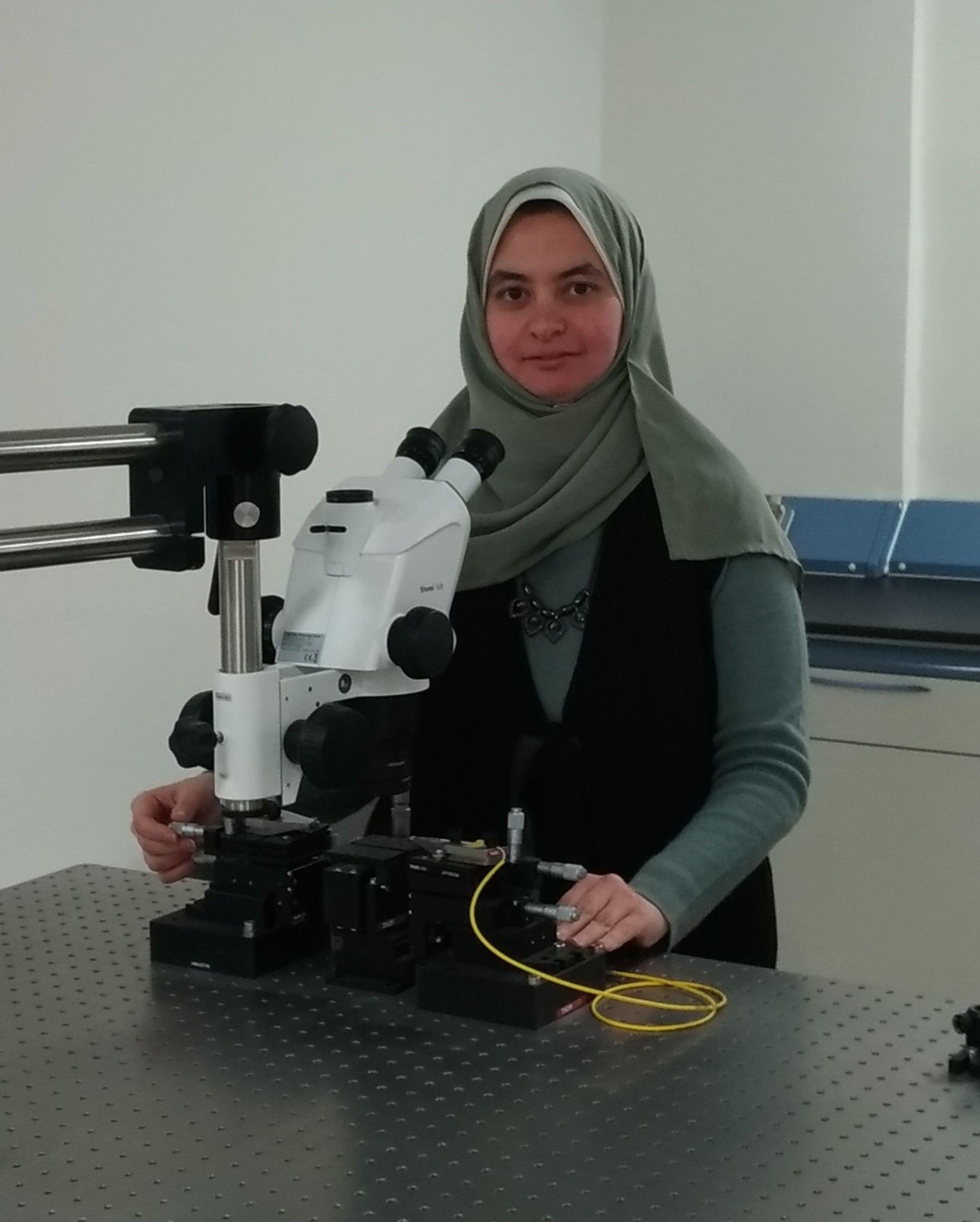

Assistant Professor, Center for Nanotechnology

Assistant Professor, Nanotechnology and Nanoelectronics engineering Program